
Most comparison articles written by roofing companies conclude that whichever product the company prefers to sell is the best one. This one tries not to do that, because all three of these systems are correct in some situations and wrong in others, and the honest answer depends on your house rather than on our preferences. We install all three. Here is how they actually differ in this climate.
Tile
What it is: Concrete or clay tile over an underlayment membrane. The tile takes the sun, the wind and the impact. The membrane below it does the waterproofing. How it handles Arizona: extremely well, and that is why it dominates the Valley. Concrete tile is essentially indifferent to ultraviolet exposure and can outlast the house. It also creates an air gap above the roof deck, which provides real thermal benefit in a climate like this one. How it fails: not through the tile. Through the underlayment beneath, which heat makes brittle over a couple of decades. This is the single most misunderstood thing about Arizona roofing, and it is why a roof that looks perfect can leak. The tradeoff: highest up front cost of the three, and it is heavy, so not every framing package can carry it. But when it does need work, a lift and reset reusing your existing tile is dramatically cheaper than a full replacement, which changes the long run math considerably in tile's favor.
Shingle
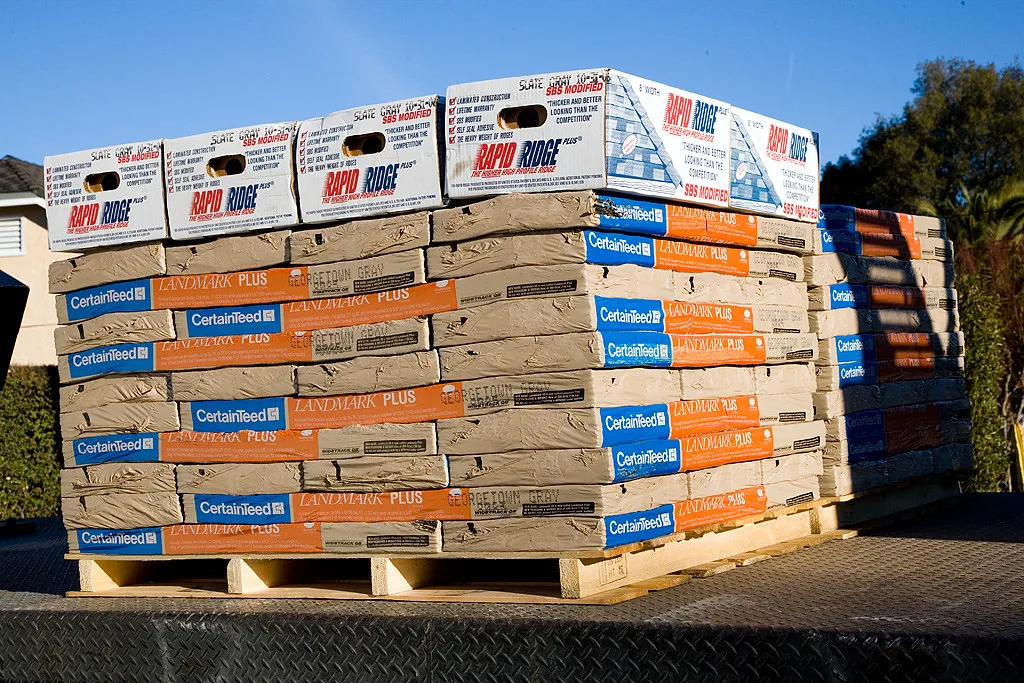
What it is: Fiberglass mat saturated with asphalt, surfaced with mineral granules, over underlayment. Architectural or dimensional shingles are the heavier multi layer version and are what we install. How it handles Arizona: less well than tile, and it is worth being direct about why. The granules are the shingle's ultraviolet protection. Once they start shedding, the asphalt underneath oxidizes, loses flexibility, and begins to curl and crack. Our sun accelerates that whole process, so shingle roofs here age faster than the manufacturer's national figures suggest. How it fails: granule loss leading to oxidation, curling and cracking, and separately, seal strip failure under monsoon wind. Poor attic ventilation accelerates both by cooking the shingles from underneath. The tradeoff: lower up front cost, lighter weight, faster installation, and a shorter service life in this climate. If you are not staying in the house long term, or the framing will not take tile, or budget is the binding constraint, shingle is a reasonable answer rather than a compromise. Just specify a good architectural system and get the ventilation right.
Foam
What it is: Spray polyurethane foam applied as a liquid that expands into a seamless insulating layer bonded directly to the deck, protected by an elastomeric coating on top. Used on flat and low slope roofs. How it handles Arizona: very well for what it is built for. Being seamless is the key advantage, because flat roofs leak at seams and penetrations, and foam self flashes around vents, curbs and parapets. It adds genuine insulation value, and a reflective coating measurably reduces heat load on the space beneath. How it fails: through the coating. The coating is the only thing protecting the foam from ultraviolet, and it needs periodic recoating. A foam roof maintained on schedule performs for a very long time. One that has not been touched in fifteen years is a different and much more expensive conversation. The tradeoff: it is not really an alternative to tile or shingle - it is the answer for a different roof geometry. If you have flat or low slope area, foam is likely the right system for it. It also requires actual maintenance rather than none, which is the part homeowners underestimate.
The Comparison Nobody Makes: Most Valley Homes Have Two of These
Here is the practical reality that gets lost in tile versus shingle arguments. An enormous number of Valley homes have a pitched tile or shingle roof and a flat section - over a garage, an addition, an Arizona room or a covered patio. That is not a choice between systems. That is two systems on one house, and the most important part of it is the transition where they meet. That junction is one of the most common leak points on any Valley roof, and it gets detailed particularly badly when the two halves were done at different times by different contractors. If your house is like this, the question is less which material is best and more who is taking responsibility for the seam between them.
So Which One
If you have tile now, the framing carries it, and you plan to stay: keep tile, and when the time comes do a lift and reset rather than a full replacement. If you have shingle now and budget or timeline is the constraint: a quality architectural system with corrected attic ventilation is a sound choice - be realistic that it will come due sooner here than the brochure suggests. If you have flat or low slope area of any size: foam or a coated system, and put recoating on a schedule instead of waiting for a leak. If you are somewhere in Scottsdale or another community with architectural standards, check what your association permits before you fall in love with an option.