

Roofing Contractor in Cave Creek, AZ
Custom desert homes assessed on site. Every roof quoted from the actual property.
Desert Lots, Custom Homes, and No Two Roofs Alike
Cave Creek is not a subdivision town. It is large lots, custom and semi custom homes, considerable elevation change, unpaved drives in places, and a building character that leans hard into desert architecture. For roofing that means almost nothing is repeatable. Contemporary desert homes with extensive flat and low slope roofing behind parapets. Territorial and pueblo styles with parapets and canales. Traditional tile on more conventional builds. Frequently more than one of those systems on the same house, which puts the transition between them squarely in play as a leak point. Estimates here have to come from being on the roof. Square footage and a price per square does not describe a Cave Creek house, and anyone quoting one from an aerial image is guessing at the parts that actually determine the cost.
Wind Exposure on Open Desert Ground
Cave Creek sits in higher desert north of the metro, on more open terrain with far less surrounding development and vegetation to break up moving air. Monsoon outflow arrives here with less standing in its way than it does in a dense subdivision. Wind is consequently a larger factor in what we see. Tile gets lifted and shifted. Shingle seals break. Parapet cap flashings work loose. Foam and coating systems take abrasion from wind driven dust and grit, which is a real degradation mechanism out here and one that does not get much attention. Almost none of that is visible from the ground. A roof that took wind damage in July frequently does not announce itself until the next storm in August, at which point water is already coming in. Post storm inspections are worth the call in Cave Creek specifically because of that exposure, and ours are free.
Dust, Debris and Drainage
Between unpaved surfaces, open desert and monsoon wind, Cave Creek roofs accumulate an enormous amount of dust and grit. Add the debris that comes off desert vegetation and gets deposited by wind, and you get drainage that clogs faster than it does in a manicured subdivision. On a flat roof, blocked scuppers and drains are how a system that is otherwise fine ends up with standing water on it after a storm. Ponding accelerates the breakdown of essentially every roofing material, adds weight, and finds any weakness in the membrane. The abrasive dust also matters for coated systems. A foam roof depends entirely on its coating for ultraviolet protection, and wind driven grit wears at that coating over time. Recoating on schedule, while the foam underneath is still sound, is the single most cost effective roof decision most Cave Creek owners can make. Once ultraviolet has reached the foam itself, the economics change completely.
Access, Staging and Getting Materials to the House
Practical logistics matter more here than in most of the Valley. Long private drives, unpaved surfaces, grade changes, gates, septic fields and desert landscaping all affect where a truck can get, where a dumpster can sit, and how material reaches the roof. We plan that with you before the job rather than discovering it on the first morning. It affects the schedule and sometimes the price, and we would rather have that conversation at the estimate than surprise you with it. We also take debris control seriously on desert property. Roofing generates a lot of small material, and desert ground does not forgive it the way a lawn does. Site gets cleaned daily, and we run a magnet sweep for fasteners.
What Lives Under Your Tile
Something we deal with constantly out here and rarely in the middle of the city: wildlife. The space under tile at the eave, gaps at the roof edge, and openings where fascia has rotted away all make excellent habitat. Packrats, birds, bees and other residents move into roof edges on desert property regularly. Nesting material blocks drainage, animals damage underlayment and displace tile, and an active bee colony in a roof edge is a genuine problem rather than an inconvenience. Closing those entry points is part of doing the roof properly, and it is one more argument for addressing fascia damage rather than letting an open gap sit at the roof edge. We do not do wildlife removal, but we will tell you plainly what we found up there and make sure the roof is closed up once whatever is living in it has been dealt with.
Custom desert home needing a real assessment? Call (480) 258-0925 for a free Cave Creek inspection.
Call (480) 258-0925 or request an estimate online.
Free InspectionOur Services
We walk the roof, photograph what we find, and give you a written estimate, often the same day.
(480) 258-0925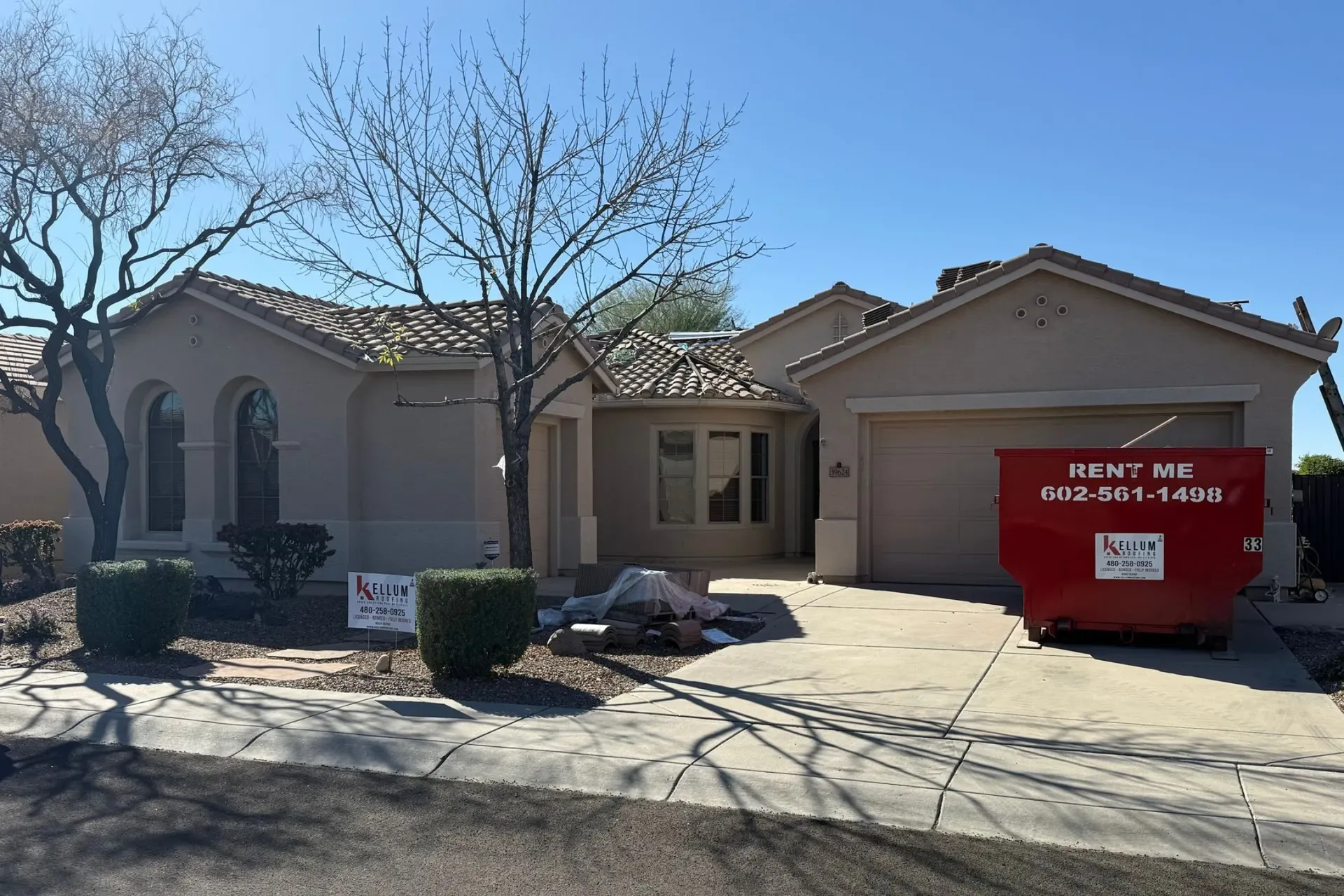
Built to endure
Arizona heat.
BBB Accredited
Accredited Business since 2024.
Licensed, Bonded, Insured
Arizona ROC 352782, Specialty Dual.
Locally Owned
Based in Glendale. Not a franchise and not an out-of-state storm chaser.
Manufacturer Warranties
Underlayment warranties from 10 to 30 years.
I am so impressed with Kellum Roofing. I reached out to a few roofing companies and never got a call back, but when I saw a Kellum Roofing truck on the road I decided to give them a call and I'm so glad I did. Jeremy came to check out my roof and was incredibly professional and thorough.