
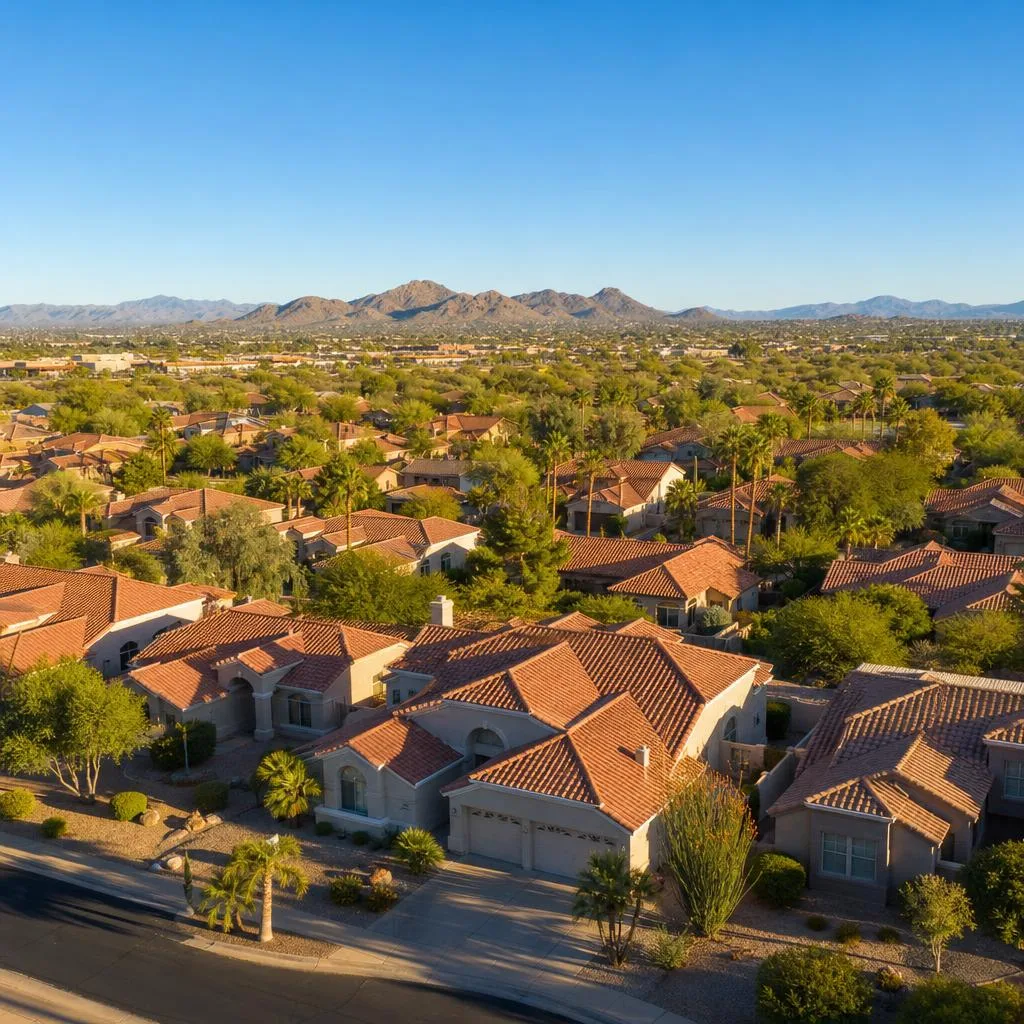
It is the first question almost everyone asks, and it is the one most roofing companies dodge until they are standing in your kitchen. So here is a straight explanation of what actually determines the price of a roof in the Phoenix area, what the real range depends on, and where homeowners most often overpay. The short version: the largest single factor is not the size of your house. It is whether you actually need new tile.
Why Nobody Can Quote You Over the Phone
A roof price is not a per square foot number multiplied by your square footage, and any contractor who gives you a firm figure without seeing the roof is either padding heavily to protect themselves or planning to revise it once they are up there. The reason is that two houses of identical square footage can be very different roofing jobs. A simple gable roof has long uninterrupted runs. A roof of the same area with six valleys, three dormers, a chimney, a skylight and a dozen penetrations has several times the linear feet of detail work, and detail work is where both the labor and the leaks live. What we can do over the phone is explain the variables so you can evaluate the estimates you receive.
The Variables That Actually Move the Price
- Roof type and what you are replacing - the single biggest lever, covered in the next section.
- Square footage - real, but less dominant than people assume.
- Pitch - a steeper roof is slower to work and requires more fall protection; it costs more per unit area than a low pitch roof.
- Complexity - valleys, hips, dormers, chimneys, skylights, parapets and every plumbing or exhaust penetration; count them on your own roof and you will have a decent proxy for how a roofer sees your job.
- Underlayment specification - our three system options range from a 10 year manufacturer warranty to a 30 year self adhered system, and the choice is yours rather than buried in a lump sum.
- Deck condition - nobody knows how much sheathing needs replacing until the roof is open; honest estimates quote this as a line item with an allowance rather than pretending it is zero.
- Tear off and disposal - a roof carrying two existing layers costs more to remove than one carrying a single layer.
- Access - long drives, steep lots, gates and limited street frontage all affect staging.
The Lift and Reset, and Why It Is the Biggest Saving Available to Most Valley Homeowners
Here is the thing that saves Phoenix area homeowners the most money, and the thing most people do not know when they start calling contractors. On a tile roof, the tile is a shield. It is not the waterproof layer. The actual waterproofing is the underlayment beneath it, and that is a membrane with a service life measured in decades. In Arizona, heat is what ends it. Under a roof deck reaching extreme temperatures for four months a year, underlayment gets brittle, cracks and stops sealing around the fasteners. Concrete tile, meanwhile, does not care about sun at all. It can outlast the house. So when a Phoenix tile roof starts leaking, the tile is usually still perfectly serviceable and only the layer underneath has failed. In that case you do not need a new roof. You need a lift and reset: we remove and stack your existing tile, strip and replace all of the underlayment, repair the deck where needed, and reinstall the same tile with new fasteners and new detail work. You end up with a completely new waterproofing system, and you did not buy tile. Tile is a large share of the cost of a full tile replacement, so the saving is substantial. If a contractor quotes you a full tear off and new tile without explaining whether a lift and reset would work on your roof, ask them directly why not. There are legitimate answers - widespread tile breakage, a discontinued profile. There is also the answer where nobody asked.
What About Shingle
Shingle replacement generally costs less per unit area than tile, but the comparison is not apples to apples over time, because shingle in this climate has a shorter service life than tile does. Ultraviolet exposure strips the granules, the asphalt underneath oxidizes, and the shingle loses flexibility and cracks. If you are choosing between the two on a home that could take either, the honest framing is that tile costs more up front and lasts longer, shingle costs less up front and comes due sooner, and how long you plan to own the house matters more than the sticker price.
Getting an Estimate You Can Actually Compare
Ask every contractor for the same things and the bids become comparable: the specific underlayment product and its manufacturer warranty, whether the price is a lift and reset or a full replacement, how deck replacement is handled if they find rot, what the workmanship terms are, and their Arizona ROC license number. If one bid is dramatically lower than the others, it is usually lower for a reason that appears in one of those five answers. We inspect for free across Phoenix and the Valley, photograph what we find, and give you a written estimate with all three underlayment options priced separately.